Loading...
Serving Corona, CA and surrounding areas. (951) 508-0140
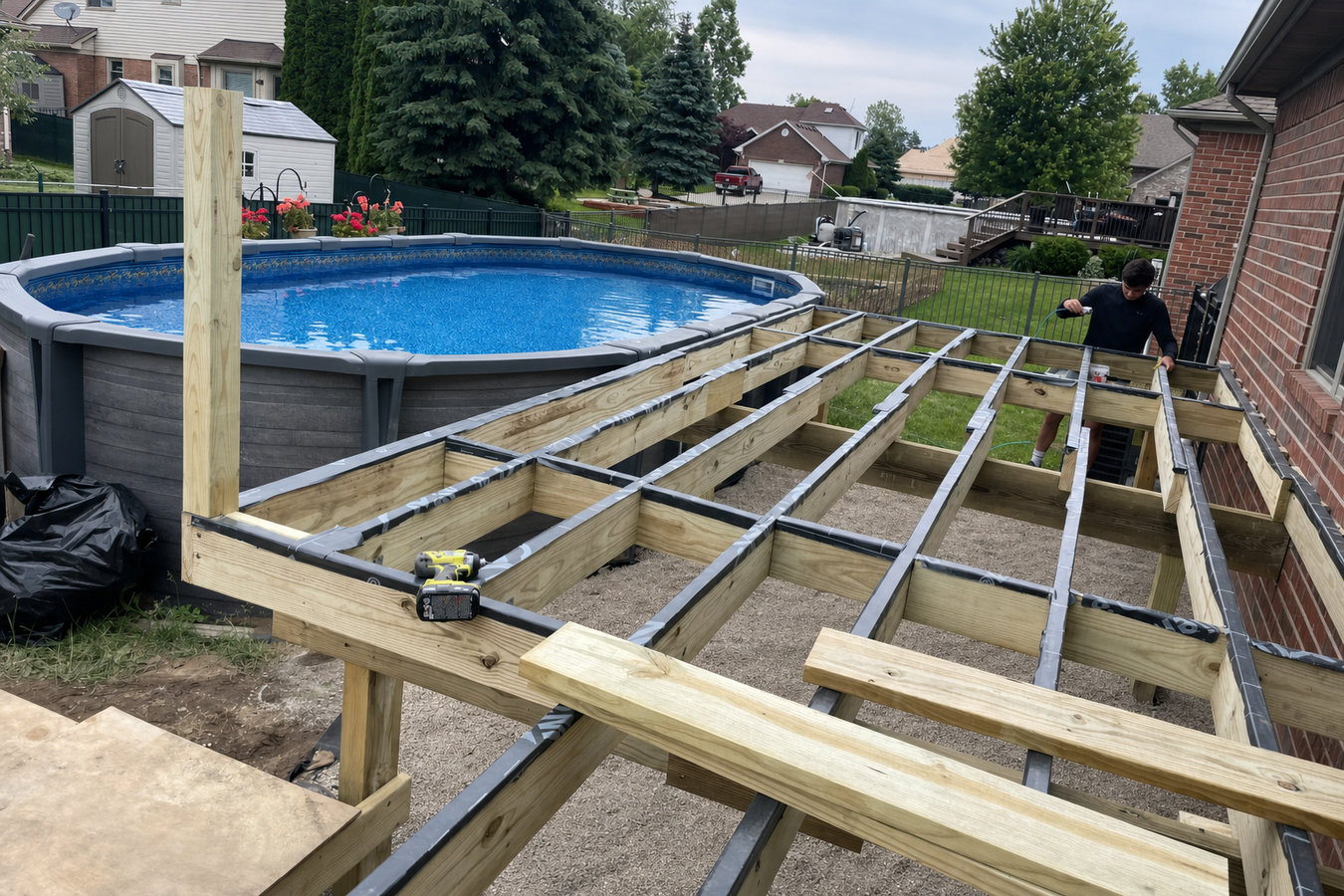
A pool deck that gets too hot to walk on by noon is not a pool deck - it is a problem. We build surfaces that stay comfortable in Corona's heat and hold up through the soil movement and seasonal rains this area is known for.
Pool deck construction in Corona covers the full paved surface surrounding your pool - material selection, ground preparation, drainage grading, and finishing - with most residential projects running three to seven construction days plus a permit review period of one to three weeks.
A well-built pool deck does more than look good. It drains water away from your home and pool equipment, stays cool enough to walk on barefoot during summer afternoons, and holds together through the ground movement that cracks so many Inland Empire decks before their time. If your current deck is cracking, pooling water, or gets too hot to use in summer, the issue is usually the material choice or the ground preparation - not something a patch job will fix. We also offer custom deck design and build for homeowners who want the pool area integrated into a larger outdoor living space.
The City of Corona requires permits for most pool deck construction, and a reputable contractor will pull those permits on your behalf and schedule the required inspections as part of their normal workflow. If a contractor tells you permits are not needed for a full deck build or replacement, that is a red flag worth taking seriously.
If you have patched cracks in your pool deck before and they returned - or if new ones keep appearing in the same areas - the surface has reached the end of its useful life. In Corona, this pattern is often driven by the clay-heavy soils underneath shifting with the wet-dry cycle. When cracks are wider than a pencil or running in multiple directions, it is time for a full replacement rather than another patch.
If your family avoids the deck between 11 a.m. and 4 p.m. in summer because it is too hot to walk on, that is a sign your current deck material is not suited to Corona's climate. Older concrete decks with dense, dark finishes absorb and hold heat in ways that newer materials and coatings are specifically designed to avoid. A new deck with the right surface can make your pool genuinely usable during the hottest part of the day.
Standing water on a pool deck after rain or splashing is a slip hazard and a sign the surface has either settled unevenly or was never graded correctly. Over time, standing water works its way into small cracks and accelerates deterioration. If puddles form in the same spots repeatedly, a contractor can assess whether re-sloping or full replacement is the right fix.
A pool deck that has lost its smooth finish - where the surface feels gritty, is flaking in patches, or has a rough texture that scratches feet - has had its protective surface layer break down from years of UV exposure. In Corona's intense sun, this happens faster than in cooler climates. A surface in this condition is harder to clean, less comfortable to use, and deteriorates more quickly without intervention.
Material choice is the first conversation we have with every homeowner, because it determines how hot the surface gets, how slippery it is when wet, how much upkeep it needs, and how long it lasts. We build with concrete in several finishes, travertine and interlocking pavers, and specialty heat-reflective coatings. For homeowners who want the pool area tied into a larger outdoor project, we also offer vinyl fence installation to define the pool zone and improve privacy at the same time.
Every build starts with ground preparation - grading for proper drainage, compacting the base material, and placing control joints in the right locations. That prep work is where the difference between a 5-year deck and a 25-year deck is made, and it is less visible than the finished surface but far more important. For homeowners adding a pool or expanding an existing one, we strongly recommend planning the deck as part of the pool project from the start rather than adding it later - it produces a better result and typically saves money.
The most affordable option - textured for slip resistance and available in lighter colors that reduce surface heat.
Adds decorative appearance while maintaining grip underfoot - a popular choice for homeowners who want a custom look without the cost of pavers.
Individual pieces that stay cooler than solid concrete and can be replaced if one cracks - well suited to Corona's expansive soils.
Applied over existing or new concrete to reduce surface temperature on sunny afternoons - ideal for decks that get full afternoon sun in summer.
Corona regularly sees summer highs above 100 degrees, and a dark or dense concrete surface can get hot enough to burn bare feet by noon. This is a safety issue, not just an aesthetic one - especially with children around. Many Corona homeowners opt for lighter-colored finishes, heat-reflective coatings, or travertine pavers, which stay noticeably cooler than plain concrete in direct sun. Beyond surface temperature, much of Riverside County - including parts of Corona - sits on clay-heavy soils that expand when wet and shrink when dry. That movement is one of the leading causes of cracked and uneven pool decks in this region. A contractor who knows this area will account for it in the ground preparation before pouring, adding a proper base layer and control joints that give the concrete room to move without cracking. For more on how expansive soils affect outdoor construction in this region, the Riverside County Flood Control and Water Conservation District publishes resources on local soil and drainage conditions.
The City of Corona's permit process adds one to three weeks to most pool deck timelines - not a reason to skip permits, but a reason to start early. If you are hoping to have the deck done before a summer event, build that permit window into your planning from the start. We serve homeowners across the area, including Riverside and Moreno Valley, where the same soil conditions, HOA dynamics, and summer heat factors apply. Corona also has a large number of planned communities with active HOAs that have specific rules about deck materials and finishes - checking your association's architectural guidelines before finalizing a design is a step we always recommend.
We respond within one business day. We will ask about pool size, existing deck condition, and material preferences so the estimate visit is productive. Expect the in-person estimate to take 30 to 60 minutes.
After you approve the estimate, we work through material and finish choices together - including surface temperature comparisons and HOA requirements if they apply. We then submit the permit application to the City of Corona on your behalf. Plan for one to three weeks for permit review.
If there is an existing deck, the first day or two involves demolition and haul-away - the loudest part of the project. After that, the crew grades for drainage, compacts the base, and sets forms. This prep work determines the quality of the finished surface.
Concrete pours or paver installation typically run one full day for a standard residential deck. Curing takes 24 to 48 hours for light foot traffic and three to four weeks before furniture goes back. We do a final walkthrough with you before the project closes out.
We reply within one business day. Free estimate, permitted work, no surprises.
(951) 508-0140We walk every homeowner through surface temperature differences before a material is chosen - not just photos of finished decks. A dark stamped concrete deck that looks beautiful in December can be unusable by July. Getting the material right for Corona's climate is the most important decision in the whole project, and we treat it that way.
The clay-heavy ground in much of Corona shifts with every wet-dry cycle, and that movement is what cracks most pool decks before their time. We prepare the ground with the right base compaction and place control joints specifically to account for this soil behavior. It is the detail that separates a deck that lasts 25 years from one that needs repairs in five.
We pull the City of Corona building permit on your behalf and schedule the required inspections as part of our normal workflow. A pool deck built without permits can create problems when you sell the home or file an insurance claim. The{' '}Pool and Hot Tub Alliance{' '}recommends always verifying contractor licensing and permit compliance before work begins.
We have worked in Corona's planned communities and know what materials and finishes most associations typically require. If your HOA needs a submittal before construction begins, we help you put together the right documentation so you are not stuck in a revision loop or asked to redo work after the fact.
Pool deck construction in Corona comes with real variables - heat, soil movement, permit timelines, and HOA requirements - and handling those variables correctly is what determines whether the deck lasts. We have built our process around all of them so you get a surface that performs the way it should for decades.
Add a low-maintenance fence to define your pool area and improve privacy without taking up yard space.
Learn MoreIntegrate your pool deck into a larger custom outdoor living design built around how your family uses the space.
Learn MoreCorona's permit queue fills fast in spring - call now to get on the schedule and have your deck ready when the weather is right.