Loading...
Serving Corona, CA and surrounding areas. (951) 508-0140
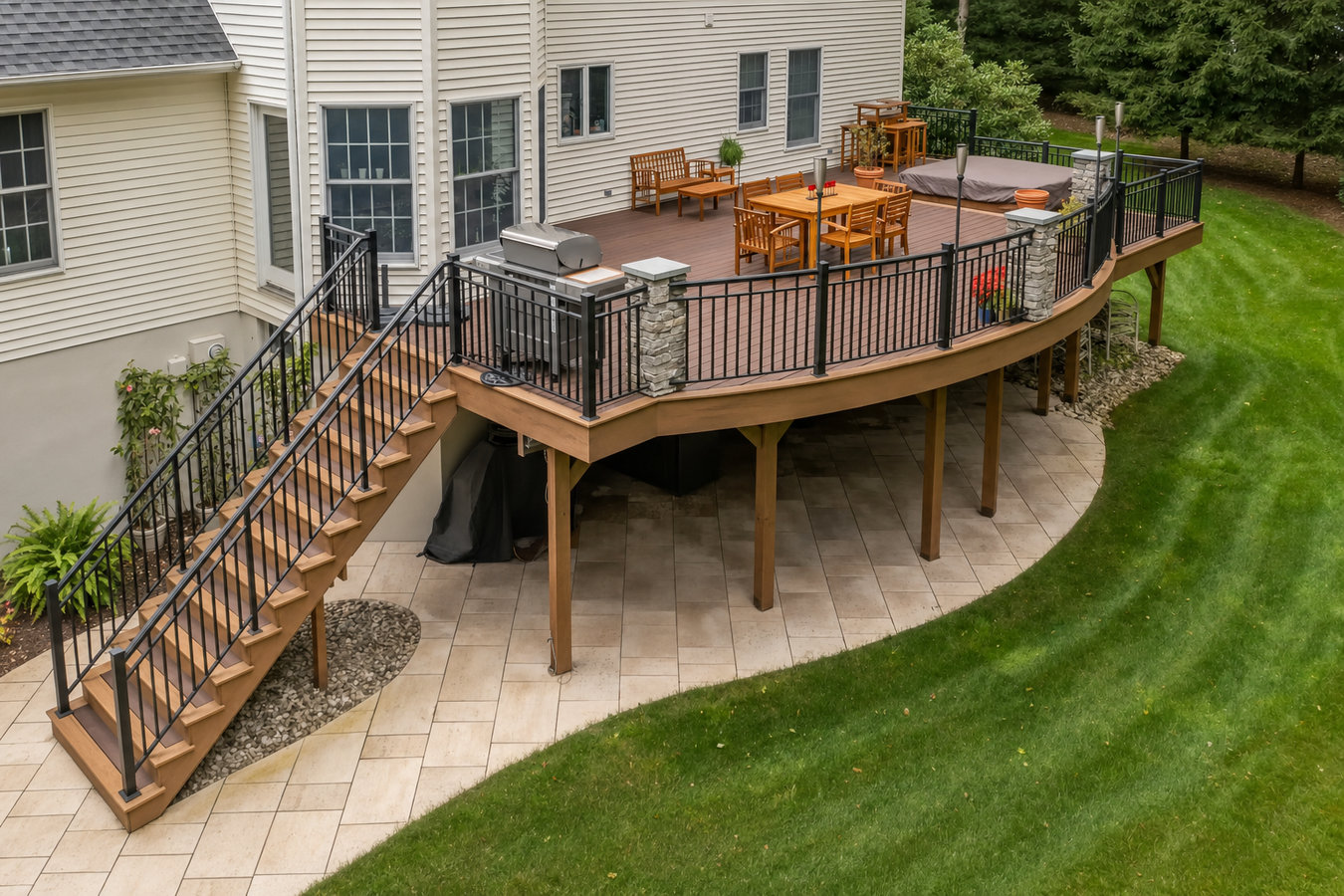
A wobbly railing is not just an eyesore - it is a liability. We install and replace deck railings in Corona that are code-compliant, properly anchored, and built to hold up through years of Inland Empire sun and heat.
Deck railing installation in Corona, CA is required by California law once your deck surface sits 30 inches or more above the ground, most installations are completed in one day on-site once permits are in hand, with total costs typically ranging from $1,500 to $10,000 or more depending on linear footage and the material you choose.
Beyond the legal requirement, a railing is the detail that makes a deck feel finished and trustworthy. A post that moves when you push on it, a top rail that sits at an awkward height, or balusters spaced too far apart - these are not cosmetic issues, they are the details that come up in home inspections and make buyers nervous. If you are planning a larger project at the same time, we also handle multi-level decks where every platform level needs compliant railings built in from the start.
Every railing we install in Corona goes through the city permit process. That means a licensed inspector checks the finished work before we consider the job done - which protects you legally and creates documentation you will want when you eventually sell.
Grab your top rail with both hands and push firmly sideways. If the railing flexes, wobbles, or makes a creaking sound, the posts are no longer anchored securely. This is a safety issue - a railing that gives way under pressure can cause a serious fall, especially for children or older adults. Do not wait on this one.
Corona's intense UV exposure and triple-digit summer heat accelerate the weathering of wood railings. If yours has turned gray, developed deep cracks along the grain, or feels rough and splintery to the touch, the wood has dried out past the point where sealing alone will help. At that stage, replacement is more cost-effective than repeated patching.
Buyers' home inspectors in the Inland Empire routinely flag deck railings that wobble, show visible rot, or were installed without a permit. If you are preparing to list your home and you are not confident the railing would pass a close look, having it replaced before listing is far less disruptive than a buyer's repair request after an offer is accepted.
If your deck surface is more than about 30 inches above the ground and there is no railing at all, California law requires one. Many older Corona homes were built with low-profile decks that did not originally need a railing, but if the grade has changed or you simply are not sure, a contractor can measure and tell you definitively.
We install new railings and replace existing ones across all deck types and configurations. Whether you have a basic pressure-treated deck that needs a straightforward wood railing or a newer composite deck where you want a cleaner look with cable or glass infill, we start with a site visit to measure, assess the existing structure, and talk through what makes sense for your deck and your HOA. If your project involves a new deck build alongside the railing work, our custom deck design and build service handles everything from framing to finished railings in one coordinated project.
Every railing installation involves anchoring posts to the deck framing - not just surface-mounting them - so each post is genuinely solid under load. We measure baluster spacing carefully to meet the California requirement that gaps are too small for a 4-inch sphere to pass through. Stair handrails are included when the deck has stairs - this detail is commonly missed by less experienced contractors and is flagged during inspections.
Best for homeowners who want a traditional look at a lower upfront cost - works well when paired with a regular sealing schedule to hold up in Corona's heat.
Best for homeowners who want the look of wood without the annual maintenance - composite railings hold their color and structure well through Inland Empire summers.
Best for homeowners who want a low-maintenance, durable option that resists rust and UV fading - powder-coated aluminum is one of the best long-term performers in high-heat climates.
Best for homeowners who want to preserve sightlines - cable and glass infill panels keep the view open while meeting all safety requirements for post spacing and railing height.
A large share of Corona's housing stock was built between the 1980s and early 2000s - which means the original wood deck structures on those homes are now anywhere from 25 to 40 years old. Wood posts that looked solid a decade ago may have moisture damage or soft spots inside that are not visible until a contractor digs into them. When we do a site visit for a railing project, we always check the condition of the existing framing first - because anchoring new posts into compromised wood is not a repair, it is a future problem. Homeowners in Norco and Eastvale with homes from the same building era face the same hidden-rot issue, and it is worth asking any contractor to check your framing before quoting.
Material choice matters more in the Inland Empire than it does in cooler or coastal climates. Corona regularly sees summer temperatures above 100 degrees Fahrenheit, and UV exposure here is intense enough to bleach and crack unsealed wood railings within a couple of seasons. Powder-coated aluminum and composite materials outperform bare wood in this climate by a significant margin. The North American Deck and Railing Association publishes material performance guidance that is a useful starting point when comparing options, and we are happy to walk through what has held up best on actual projects in this region.
We respond within one business day. On the call we ask about your deck size, the material you are considering, and whether your neighborhood has an HOA. We then schedule a site visit - an accurate quote requires seeing the actual structure, not just a description.
We measure the deck perimeter, check the condition of existing posts and framing, and note anything that could affect the job - soft wood, an unusual deck shape, or stairs needing a handrail. You receive a written quote that separates materials from labor so you know what you are paying for.
We apply for the city building permit on your behalf. If your neighborhood has an HOA, we help you submit the railing design for written approval before any work begins. Permit processing typically takes a few days to two weeks, and we keep you updated throughout.
Most standard railing installations are completed in one day. After installation, the city inspector checks the work - we coordinate this appointment for you. Before we leave, we walk you through every section: push on every post, confirm the top rail is level, check the baluster spacing. If anything is not right, we fix it on the spot.
Free on-site assessment. Written quote. No obligation.
(951) 508-0140Many Corona homes have decks built in the 1980s and 1990s - old enough that the framing underneath may have soft spots or hidden rot. We check the existing structure during the site visit, before quoting, so the price in your estimate accounts for what is actually there and you are not surprised halfway through the job.
We apply for the city building permit for every railing project in Corona. A city inspector checks the finished work, which creates documented proof the railing meets safety standards. That documentation is what protects you when a buyer's inspector shows up during a home sale.
A significant share of Corona's neighborhoods - Sycamore Creek, Dos Lagos, and South Corona among them - have HOA design requirements for visible exterior features like deck railings. We know this process and help you submit the right materials to your HOA before a single post is set. You will not discover a compliance problem after the fact.
Railing material advice should be grounded in how things actually hold up in Inland Empire conditions - not just what looks good in a catalog. We tell you honestly which materials perform well through Corona's summers and which ones require more upkeep than most homeowners expect. You can verify our licensing through the California Contractors State License Board before you sign anything.
Railing installation looks simple from the outside, but the details - post anchoring depth, baluster spacing, stair handrail profile - are exactly what inspectors check and exactly what buyers notice. We get those details right the first time.
Building a new deck from scratch - we handle framing, decking surface, and railing installation together as one permitted project.
Learn MoreMulti-level deck builds for sloped Corona lots where every platform level needs properly anchored, code-compliant railings built in from day one.
Learn MorePermit-ready crews are booking now - reach out today to lock in your spot before the spring rush fills the calendar.